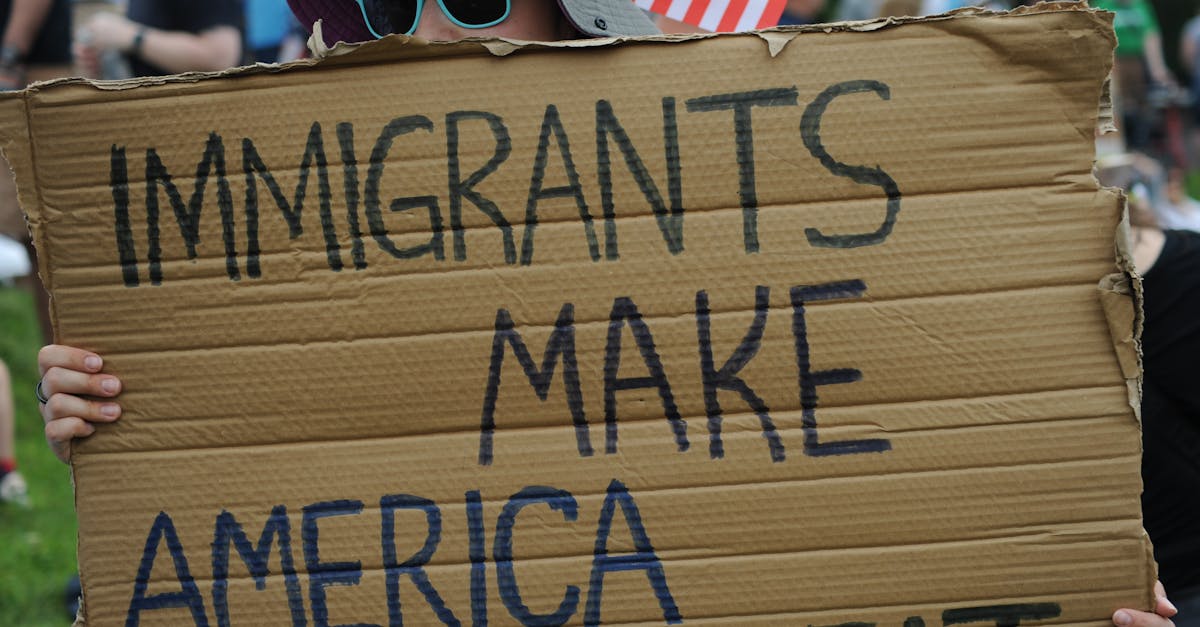
A Surprising Melody of Demand and Displacement
Consider this: while the U.S. has been battling a pandemic-era inflation rate of 3.3%, performance indicators in certain sectors suggest that immigration has played a dual role—stimulating growth yet imposing strain. The narrative often paints newcomers as economic liabilities, yet data reveals a contrasting story where job creation and pressures in labor markets exist side by side. How can these realities coexist without igniting a deeper public discourse?
When Expectations Clash with Outcomes
On the surface, the economic contributions of immigrants are remarkable. Since the early 2020s, immigrants have accounted for a significant segment of the workforce, fueling sectors such as technology and healthcare, which are notoriously starved for skilled labor. A survey conducted by the Bureau of Labor Statistics shows that unemployment stands at 4.3%, which is relatively low by historical standards, suggesting that jobs are indeed there for the taking. Yet, this scenario also conceals a darker underbelly—growing resentment among domestic workers feeling squeezed by increased competition, particularly in low-wage sectors.
Some regional economies benefit immensely from immigration. For instance, states like California and Texas leverage immigrant labor to bolster their exports, significantly impacting GDP growth. By contrast, areas that have seen a spike in immigration without economic preparation—think Rust Belt states—exhibit heightened tension, experiencing wage stagnation and diminished job security. Unraveling this patchwork of experiences reveals the complexity of immigration’s impact: financial health for some, precariousness for others.
The Hidden Trends of Sluggish Growth
The narrative surrounding immigration primarily focuses on job creation. However, a crucial point often omitted is productivity growth. While immigrant labor can fill vacancies, it does not inherently enhance productivity, which has remained sluggish across various industries. For instance, research indicates that productivity growth in the manufacturing sector has averaged only 1.3% over the past few years, despite the influx of immigrant workers. This poses an unsettling question: can a workforce devoid of simultaneous productivity gains ever provide lasting economic prosperity?
Drawing comparisons to countries like Canada, which adopts a more immigration-friendly policy, can illuminate the potential pitfalls of the U.S. approach. Canada integrates newcomers with robust support systems aimed at enhancing productivity and integration, fostering a more cohesive economy. Without similar strategies, the U.S. risks repeating mistakes that lead to economic inefficiencies masked by short-term labor saturation.
Winners and Losers in the Economic Landscape
The labor market’s disparity exemplifies the tug-of-war unfolding within immigration discourse. High-skilled immigrants are viewed as essential assets, boosting innovation and contributing to industries under strain. The situation worsens for low-skilled immigrants, who often face exploitation in the gig economy and lower wages, struggling to lift themselves up the economic ladder. Such dynamics provoke a fundamental question: in a society that values meritocracy, why are we underselling the potential of low-skilled labor?
The Federal Reserve’s interest rate policy fluctuating at 3.64% signals a tightening monetary landscape that complicates the job outlook for many. Borrowing costs and inflation likely steer employers toward automation or minimizing workforce expansion—a trend that could further marginalize low-skilled immigrant labor. As policymaking becomes increasingly complex, how will this affect the long-term trajectory of labor demographics?
A Fork in the Road: Economic Opportunities or Strain?
Given the intricate relationship between immigration and the economy, we approach a vital juncture: will the U.S. reinterpret immigration as an engine of prosperity that necessitates strategic integration policies? The divergent experiences within sectors and regions reflect a pressing question for policymakers and citizens alike. Are we prepared to rethink our social contracts, addressing disparities to cultivate a truly flourishing economy, or continue down a path that exacerbates division?
Such considerations define the conversation on immigration and its economic consequences. As the debate weighs on, the urgency remains: how will the U.S. align its immigration strategy with its economic aspirations, and which path will ultimately shape the future of its workforce?