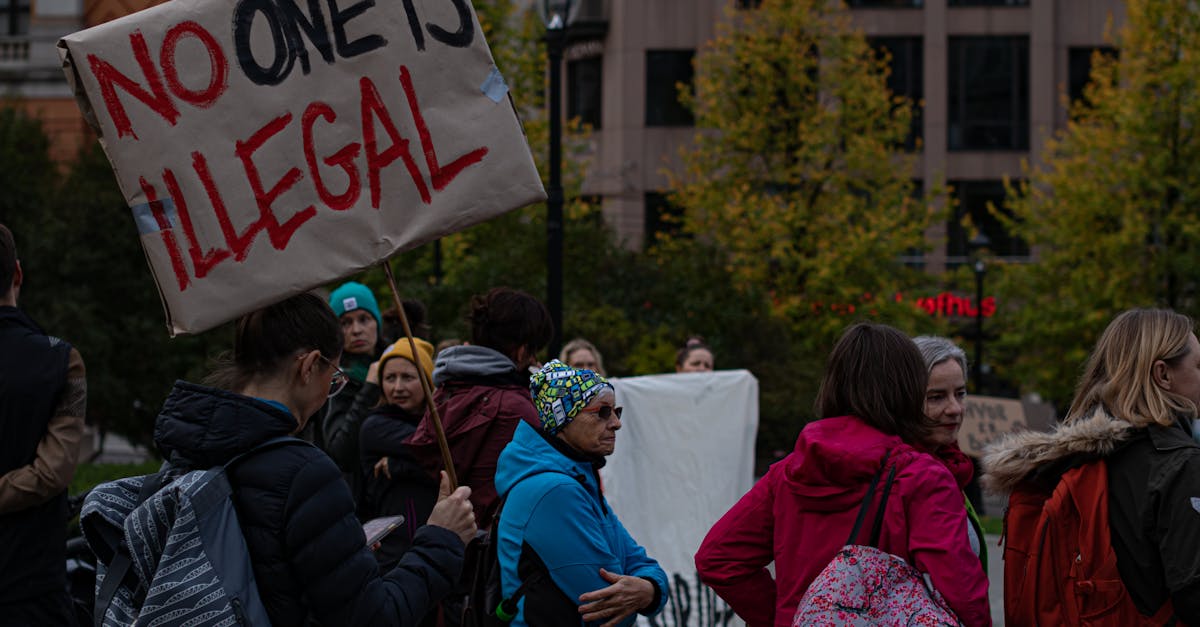
Immigration’s Paradox: Economic Promise Fractured by Reality
The glaring discrepancy between widely held beliefs about immigration and the ensuing economic realities could be the very crux of America’s ongoing debates. While businesses drum up headlines proclaiming the need for increased immigration to address labor shortages, data reveals a more nuanced picture, one where many American workers are left grappling with stagnating wages and job insecurities.
Numbers That Challenge Assumptions
Conventional wisdom often suggests that immigration fuels economic growth. Echoing this sentiment, the unemployment rate hovers at 4.4%, suggesting an economy that is relatively healthy. However, this figure disguises deeper issues. A closer look at sectors reveals that those in lower-wage jobs—often intersecting with the immigration workforce—experience heightened competition, leading to wage stagnation. Adjusted for inflation, which sits at 2.4%, many workers find that their purchasing power has declined despite ostensibly low unemployment figures.
As businesses call for immigrants to fill the gaps in sectors with labor shortages, primarily in agriculture and hospitality, many American workers have either lost jobs or witnessed their wages eroded. Are job opportunities collapsing for a significant portion of the workforce, while employers rewarded with immigrant labor reap the benefits?
The Invisible Hand of Investment
The focus on immigration often overlooks another vital statistic—the investment sector, which paints a different picture of economic health. With interest rates at 3.64%, businesses are borrowing at relatively low costs, but this boom in capital doesn’t translate equally across every demographic or geographic region. On the coasts, especially in areas like San Francisco and New York, the tech industry thrives due to a diverse talent pool from overseas. However, elsewhere—in the Midwest or South—cities stagnate or even decline, as native residents struggle against an inflexible labor market.
Consequently, as the wealthy tech hubs grow and attract individuals of diverse backgrounds, the disconnect between those regions and struggling areas might set the stage for economic inequity, fostering resentment and social tension. Are we witnessing the emergence of a bifurcated economic landscape across the country?
The Unseen Ramifications of Immigration Policies
What often remains unreported amid the rhetoric of pro-immigration and anti-immigration advocates is how existing immigration policies inadvertently create barriers for American workers. The H-1B visa program, for instance, is designed to attract high-skilled workers but also deteriorates the bargaining power of domestic tech employees, many of whom face increased pressure to keep salaries in check. While some may argue that this enriches the overall economy, what about the consequences on job security and wage growth for those earning at lower levels?
As companies prioritize profits and efficiencies, the human element—the American worker—is too frequently sidelined. Strikingly, between 1990 and 2020, the number of low-wage jobs filled by immigrant workers has grown substantially, but this job creation has not been mirrored by wage growth in the same demographic. This trend raises a pressing question: does a growing labor pool translate to economic advancement for all, or is it a balancing act teetering in favor of employers?
A Fork in the Road: Where to From Here?
The divergence between expectations surrounding immigration and the lived realities of American workers presents serious implications for policy makers. As communities become polarized by economic pressures, the question becomes not whether to welcome immigrants, but how to create an inclusive economy that uplifts all workers—natives and immigrants alike.
Will we invest in ensuring educational opportunities to match immigrant skills with domestic unemployment? Can we develop a framework where both native workers and new arrivals can thrive? As debates rage on, the fundamental crossroads remains clear: how to balance economic opportunity with the needs of those already here. The stakes have never been higher—who will shape this crucial narrative moving forward?